GMKTEC EVO-T2S Mini PC with Intel Panther Lake X7-358H, 64 GB, 1 TB
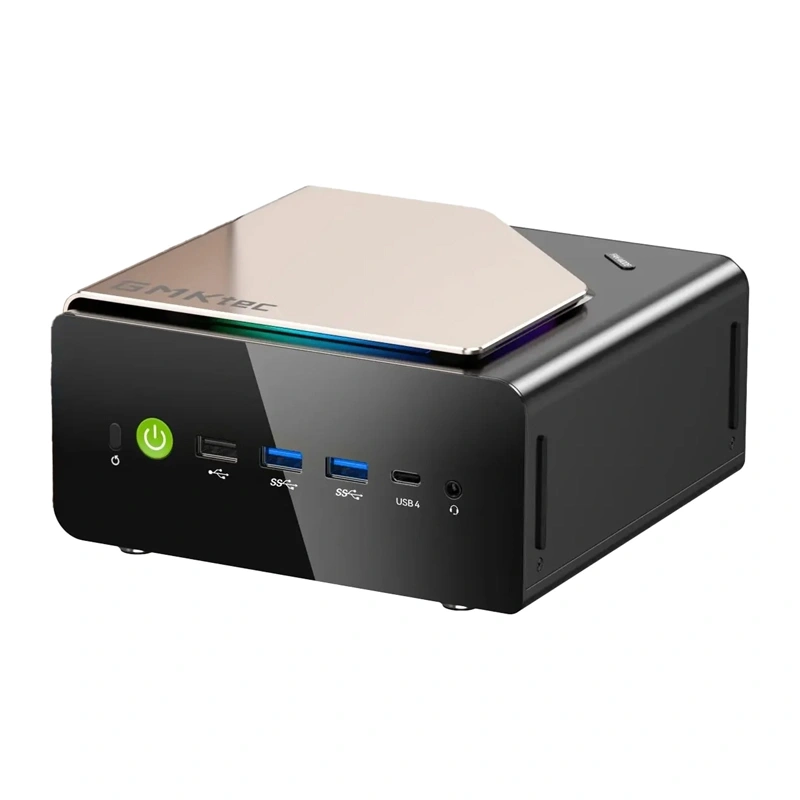
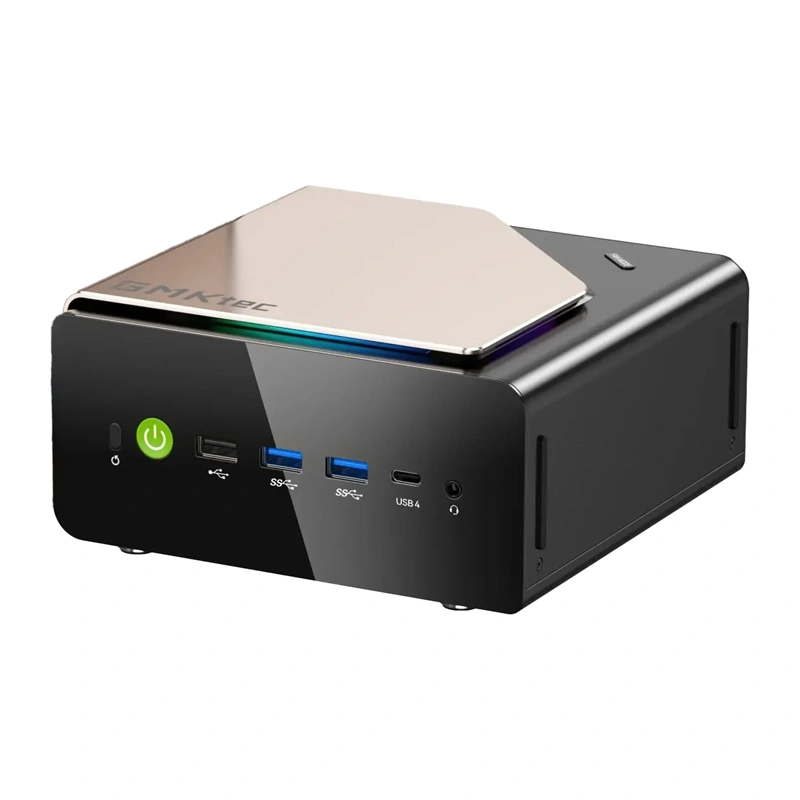
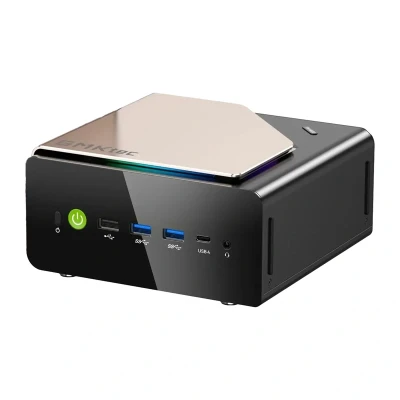
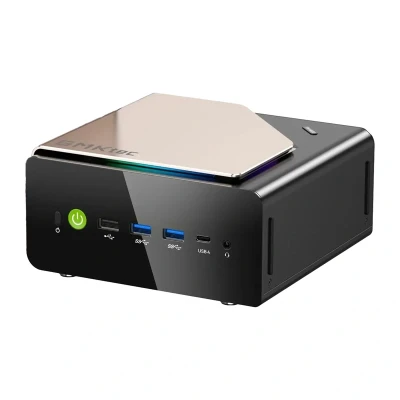
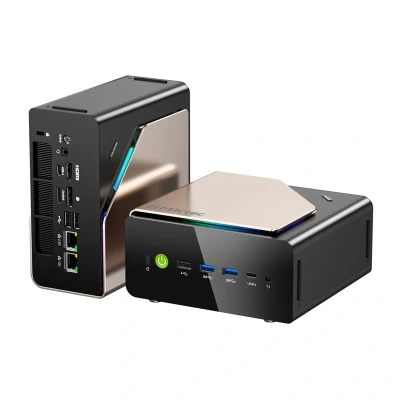
The GMKTEC EVO-T2S combines a compact design with performance tailored for demanding work, entertainment, and local AI-powered tasks. The Intel Core Ultra X7 358H processor, 64 GB of LPDDR5X memory, and a 1 TB hard drive create a configuration suitable for design and content editing, as well as gaming and handling large AI models. AI performance of up to 180 TOPS, high-speed 10 Gb/s networking, Wi-Fi 7, two USB4 ports, and the ability to connect an external graphics card via OCuLink further enhance the device’s capabilities. Stable operation under heavy loads is supported by an advanced cooling system with two fans, and support for up to four independent displays allows you to build a comfortable, multitasking workstation. The package is rounded out by pre-installed Windows 11 Pro, making the computer suitable for use at home, in the office, and in more specialized environments.

Intel Core Ultra X7 358H – Panther Lake Platform Performance
At the heart of the computer is the Intel Core Ultra X7 358H from the Panther Lake family, utilizing technologies based on Intel’s 18A and TSMC’s N3ZE processes. The processor offers 16 cores and 16 threads in a 4P + 8E + 4 LP-E configuration, and the Performance cores reach clock speeds of up to 5.1 GHz. You also have 18 MB of L3 cache at your disposal, which facilitates smooth operation of complex applications and intensive multitasking. The platform is designed for a wide range of applications—from home gaming, creative design, education, and streaming to on-premises AI deployments in small and medium-sized businesses, smart manufacturing, retail, and solutions for the medical sector.

On-Device AI—Up to 180 TOPS
The EVO-T2S is designed to perform advanced AI tasks directly on the device. The fifth-generation NPU delivers up to 50 TOPS of performance, and total AI performance can reach 180 TOPS in INT8 computations, while GPU and NPU acceleration optimizes local AI tasks, speeding up image generation, video enhancement, and large language model inference, among other things. These capabilities are complemented by GMKtec Claw—a 24/7 AI digital assistant that allows users to create workflows without programming, simply by configuring a sequence of actions. The solution supports multiple models and their integration, and on-premises data processing can be particularly useful when working with confidential information, large files, and tasks requiring greater control over privacy.

Intel Arc—High-Performance Integrated Graphics
The Intel Arc integrated graphics chip features third-generation Xe-core architecture, 12 Xe cores clocked at up to 2.5 GHz, and 16 MB of L2 cache. It also features 96 XMX AI engines and 12 ray-tracing units, and support for XeSS-MFG enables AI-powered multi-frame generation. For the Intel Core Ultra X9 388H / X7 358H platforms, GPU performance is also approximately 10% higher on average than that of the NVIDIA GeForce RTX 4050, while 3DMark Time Spy scores for the architecture exceed 7,000 points. For the X9 388H variant, an iGPU score of 6,300 points is also reported, placing it, according to the manufacturer, among the top integrated graphics chips for desktop computers.

AAA games, design, and over 80 applications
Support for XeSS with 2x upscaling allows you to harness the potential of the integrated graphics while gaming at 1080p resolution with high image quality, whether in demanding AAA titles or popular online games. The GPU also performs well during video editing, 3D rendering, and graphic design, with efficiency in creative tasks increasing by up to 40%. This powerful configuration enables you to work with over 80 design applications, including AR, Photoshop, Dreamweaver, After Effects, Premiere, and Illustrator. Editing content, 3D modeling, graphic design, gaming, and other tasks can be performed simultaneously, reducing the need to switch between separate workstations or devices.

64 GB of LPDDR5X and storage for up to 16 TB of data
The built-in 64 GB of LPDDR5X memory running at 8533 MT/s provides ample capacity for intensive multitasking, long work sessions, handling large AI models, and processing complex files. This model features a 1 TB drive, but the design allows for significantly greater expandability—the primary M.2 2280 slot uses PCIe 5.0 x4 and supports Phison aiDAPTIV+, while the additional M.2 2280 slot operates at the PCIe 4.0 standard. The total capacity can reach up to 16 TB—8 TB per drive—making it easy to separate work files, projects, AI data, and game and multimedia libraries.

Stable Power Delivery During Long Operating Hours
The EVO-T2S is designed not only to deliver high burst performance but also to sustain it under sustained load. In a two-hour AIDA64 test under full load, the computer maintained a stable 54 W, with no fluctuations in the power curve, no throttling, and no clipping. You can tailor its performance to the task at hand by selecting the 35 W Silent mode, Balanced mode at 45 W, or Performance mode at 54 W, while peak CPU power can reach up to 60 W. This allows you to transition from quiet everyday work to large creative projects, local AI computations, or demanding gaming without changing your hardware.

Two Fans and Intelligent Temperature Management
An intelligent cooling system utilizing two fans and a well-designed airflow path ensures optimal operating conditions. The processor works in tandem with a VC design and a finned heat sink, while dual intakes surrounding the chassis enhance heat dissipation efficiency while minimizing noise. Intelligent control automatically adjusts fan speed to the current load, and the dust-proof design helps extend the system’s lifespan. An additional intelligent ventilation system with RGB lighting and airflow directed around the components also supports stable operation of memory and SSDs during prolonged high-performance use.

Wi-Fi 7 and dual 10 Gb/s and 2.5 Gb/s Ethernet
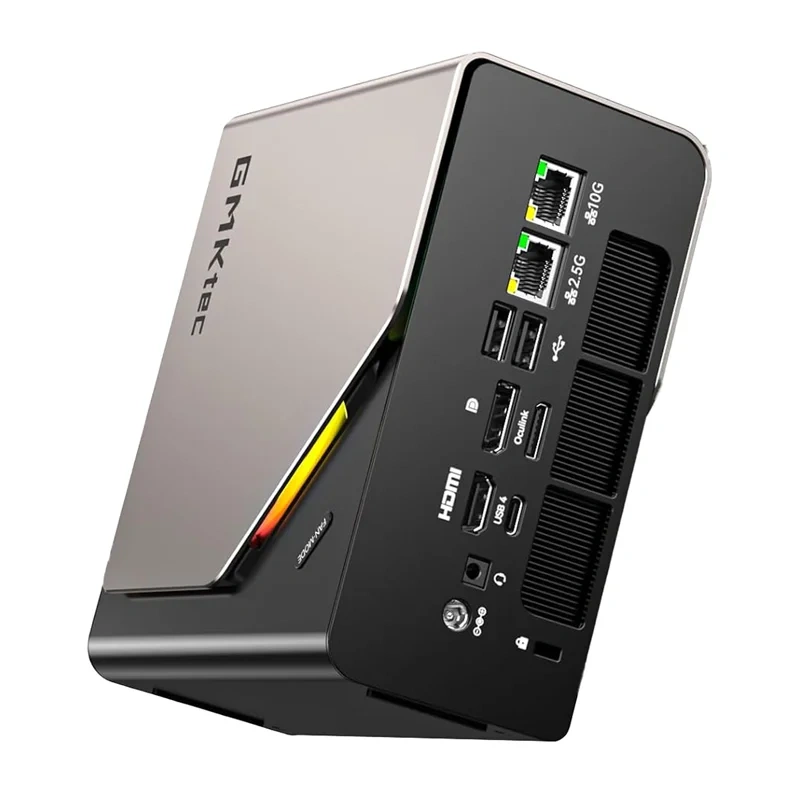
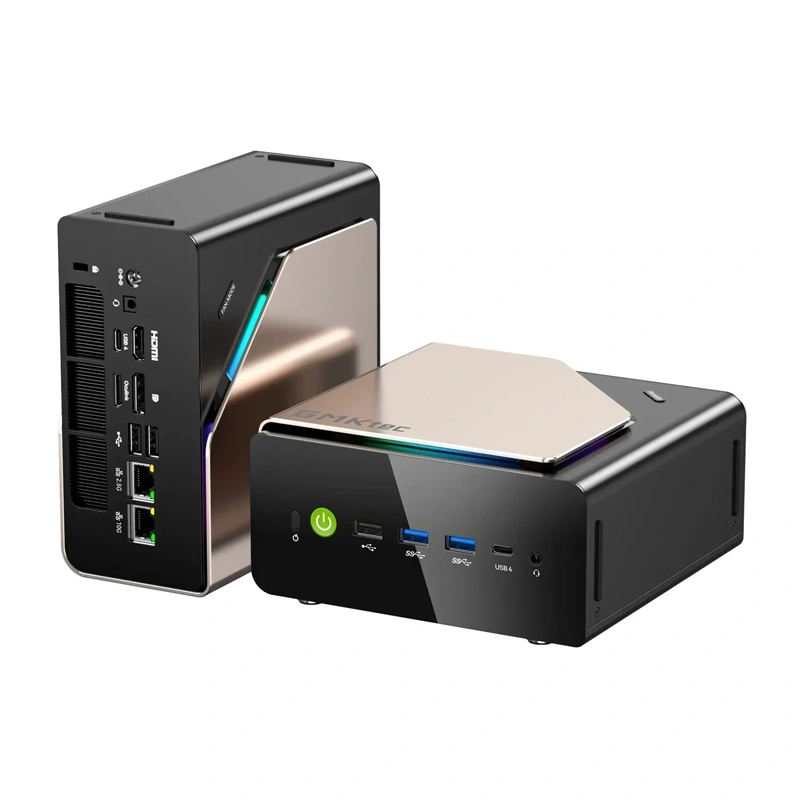
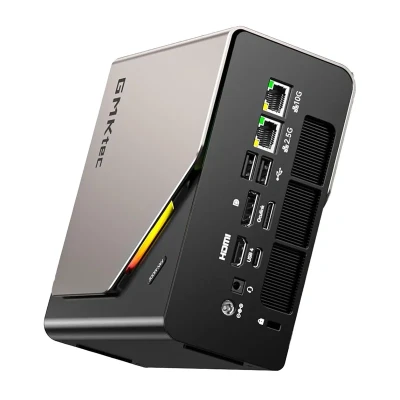
Wireless connectivity is handled by the Intel RZ717 Wi-Fi 7, offering maximum speeds of up to 2.9 Gb/s, while Bluetooth 5.4 allows you to conveniently connect the computer to accessories. If you prefer a wired connection, you can use the two Ethernet ports (10 Gb/s and 2.5 Gb/s), allowing the computer to work with both high-speed network infrastructure and more standard configurations. The 10 GbE connection provides up to ten times the bandwidth of classic Ethernet, which is important when transferring large files, using local AI resources, NAS servers, or playing online games. An extensive set of networking options allows you to tailor the connection to your specific environment and minimize latency during demanding tasks.

Four Displays and 40 Gb/s USB4
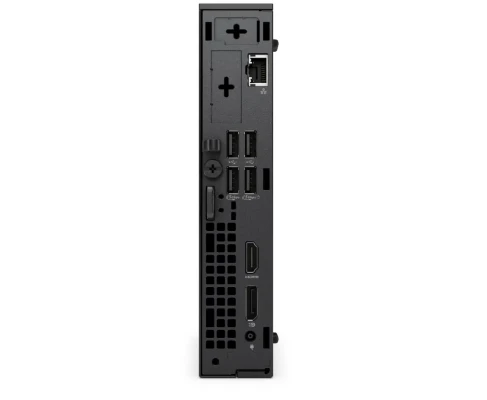
The GMKTEC EVO-T2S supports up to four independent displays via HDMI 2.0, DisplayPort 1.4, and two USB4 ports, allowing you to comfortably work, study, play, or monitor multiple applications and data streams simultaneously. USB4 provides a bandwidth of up to 40 Gb/s—up to four times faster than USB 3.2 Gen 2 at 10 Gb/s— making it ideal for transferring large files, working with eGPUs, and expanding your setup with 4K and 8K displays. A single cable can simultaneously support a 100 W PD power input, a DisplayPort signal, and data transmission. This allows you to use advanced portable touchscreen monitors in a plug-and-play configuration, delivering power, video, and touch support through a single connection.

A computer designed for virtually any environment
The rear-mounted OCuLink port uses PCIe Gen4 x4 and allows you to connect an external desktop graphics card from the NVIDIA GeForce RTX 40 or RTX 50 series, which, when combined with an eGPU dock, brings the computer’s capabilities close to those of a full-size system for AAA gaming, professional rendering, and AI-powered content creation. The eGPU dock is sold separately, and OCuLink does not support “hot swap”—devices must be connected only when the computer is turned off to avoid damage. Windows 11 Pro comes pre-installed, providing access to Microsoft Teams, compatibility with business applications, IT environment consistency, cloud management tools, and Zero Trust-based security that protects data and access regardless of location.

| Manufacturer | GMKtec |
|---|
| Model | EVO-T2S |
|---|
| Processor | Intel Core Ultra X7 358H |
|---|
| Processor Architecture | Panther Lake |
|---|
| Process Technology | Intel 18A + TSMC N3ZE |
|---|
| Number of Cores | 16 (4P + 8E + 4 LP-E) |
|---|
| Number of threads | 16 |
|---|
| Max. Performance core clock speed | 5.1 GHz |
|---|
| L3 cache | 18 MB |
|---|
| Max. CPU power | up to 60 W |
|---|
| Power modes | Silent 35 W / Balanced 45 W / Performance 54 W |
|---|
| Graphics processor | Intel Arc Graphics, 3rd Gen Xe-core |
|---|
| Number of Xe cores | 12 |
|---|
| Max. GPU clock speed | 2.5 GHz |
|---|
| GPU L2 cache | 16 MB |
|---|
| XMX AI engines | 96 |
|---|
| Ray tracing units | 12 |
|---|
| Scaling technology | Intel XeSS |
|---|
| Frame generation | XeSS-MFG AI Multi-Frame Generation |
|---|
| NPU | 5th Gen |
|---|
| NPU performance | up to 50 TOPS |
|---|
| Total AI performance | up to 180 TOPS (INT8) |
|---|
| RAM | 64 GB LPDDR5X |
|---|
| RAM Speed | 8533 MT/s |
|---|
| RAM | Integrated |
|---|
| Storage Capacity | 1 TB |
|---|
| Main SSD Slot | M.2 2280 PCIe 5.0 x4 |
|---|
| Phison aiDAPTIV+ support | Yes |
|---|
| Additional SSD slot | M.2 2280 PCIe 4.0 |
|---|
| Max. supported storage capacity | 16 TB (2 × 8 TB) |
|---|
| Wi-Fi | Intel RZ717 Wi-Fi 7 |
|---|
| Max. Wi-Fi speed | up to 2.9 Gb/s |
|---|
| Bluetooth | 5.4 |
|---|
| Ethernet | 10 Gb/s + 2.5 Gb/s |
|---|
| HDMI | HDMI 2.0 |
|---|
| DisplayPort | DisplayPort 1.4 |
|---|
| USB4 | 2 × USB4 |
|---|
| USB4 bandwidth | up to 40 Gb/s |
|---|
| USB4 DisplayPort | yes |
|---|
| USB4 Power Delivery | input up to 100 W |
|---|
| Max. number of supported displays | 4 independent screens |
|---|
| Image scaling support | 4K / 8K |
|---|
| OCuLink | PCIe Gen4 x4 |
|---|
| External GPUs supported via OCuLink | NVIDIA GeForce RTX 40 / 50 Series |
|---|
| OCuLink hot swap | no |
|---|
| Cooling system | 2 fans |
|---|
| CPU cooling | VC + finned heatsink |
|---|
| Air intakes | dual, perimeter-mounted |
|---|
| Cooling system lighting | RGB |
|---|
| Dust-proof design | yes |
|---|
| Operating system | Windows 11 Pro |
|---|
| AI software | GMKtec Claw |
|---|







 Pieejams: 29 gab
 Pasūtiet tagad un saņemiet veikalā 22. oktobrī

 Ielikt grozā













 Instagram